
Neurodermatitis During Pollen Season: Why Your Skin Reacts More Strongly Now – and What You Can Do
The days are getting longer, nature is starting to bloom – and as beautiful as that is, it brings a real challenge for many people. Watery eyes, a runny nose, constant sneezing – the classic companions of pollen season. Challenging enough on their own.

For people with neurodermatitis, however, there is an additional burden: The skin often reacts even more sensitively during this time than usual. More itching, frequent flare-ups, less sleep. Pollen season can be one of the most challenging phases of the entire year for those affected – simply because everything hits at once.
If you have neurodermatitis and also react to pollen, you probably know this pattern all too well. And you are not alone: Many sufferers experience exactly this connection.
In this article, you will learn why this happens, what is going on in your skin during pollen season, and above all, what you can specifically do to support your skin during this time.
What is Neurodermatitis?
Neurodermatitis – medically known as atopic dermatitis or atopic eczema – is a chronic inflammatory skin condition. The core problem lies in the skin barrier: It does not function as it should. The skin loses moisture more quickly, has difficulty protecting itself against external influences, and the immune system reacts excessively to stimuli.
The result: Itching, dry skin, redness, and inflammation – in flare-ups that can be triggered by various factors. These include stress, certain substances in clothing or skincare, temperature fluctuations – and allergens such as pollen.
Pollen Allergy and Neurodermatitis – What’s the Connection?
Here’s a term that many people are not yet familiar with, but which explains very well why pollen allergy and neurodermatitis often occur together: the atopic march (or atopic triad).
The atopic march describes the genetic tendency of some people to develop several atopic conditions – namely neurodermatitis, hay fever, and allergic asthma. These three conditions share the same root: an immune system that reacts hypersensitively to actually harmless substances such as pollen, animal dander, or certain foods.
This means: People with neurodermatitis often have a natural predisposition to also react allergically to pollen – and vice versa. Both conditions are expressions of the same underlying disposition.
What does this mean specifically for your skin? Pollen doesn’t just burden your body through the respiratory tract. They also settle on the skin. And because the skin barrier is weakened in neurodermatitis, these allergens can penetrate more easily – triggering a local inflammatory reaction.
The result: During pollen season, the skin not only reacts more sensitively, but can be actively triggered by airborne pollen, even if you had no direct contact with the triggering plants.
What Happens in Your Skin During Pollen Season?
When pollen lands on your skin or enters your airways, your immune system recognizes them as invaders and immediately launches a defense response. What happens next is actually remarkable: The body actively tries to get rid of the allergens. Watery eyes are meant to flush them out. Sneezing is meant to expel them.
All of these are basically protective reflexes – the body is doing exactly what it was built for. The problem is: It is reacting to something that is actually harmless. And the result feels anything but protective.
The central messenger substance in this process is histamine. Histamine is released by certain immune cells – mast cells – as soon as the body comes into contact with an allergen. It is essentially the alarm signal of the immune system: Histamine dilates blood vessels, increases the permeability of vessel walls, and – particularly relevant for the skin – sensitizes nerve endings, which leads to the typical itching.
The problem: Itching leads to scratching. Scratching further damages the already sensitive skin barrier. Through the weakened barrier, even more allergens and irritants can penetrate. This triggers further inflammatory reactions – a vicious cycle that is difficult to break as long as pollen levels remain high.
In addition, your body is working at full capacity during this time. The immune system is constantly activated, which also costs extra energy.
6 Things That Can Support Your Skin During Pollen Season
The good news: You can actively do something. None of these measures is a miracle cure, but in combination they can make a noticeable difference.
1. The Lock Principle: Don’t Let Pollen In in the First Place
One of the most effective measures is also one of the simplest: When you come home, take off the clothes you wore outside immediately – ideally in the entrance area or hallway, not in the bedroom. Have a fresh set of clothes ready that you then wear indoors.
Pollen clings to fabrics and gets carried throughout the home. Anyone who introduces this small ritual significantly reduces the pollen load in their own four walls – especially in the bedroom, where the skin is in contact with the environment for hours.
2. Shower in the Evening – and Pay Attention to a Few Things

Showering in the evening instead of the morning is particularly sensible during pollen season for people with sensitive skin. Pollen you’ve collected during the day would otherwise end up on your pillow, giving your skin less chance to recover overnight.
When showering: Keep the water not too hot. 35–37 degrees Celsius is ideal. Hot water can dry out the skin even more and weaken the barrier. Aggressive shower gels should also take a break during this time – the fewer irritating ingredients, the better.
3. The Salt Shower – A Gentle Option for Pollen Season
Seawater has long been known for its soothing effect on the skin – many sufferers know all too well that their skin feels noticeably better after a beach holiday.
Sea salt gently cleanses, and the minerals naturally contained in sea salt can help support the skin’s natural protective function. The result: After a short time, the skin simply feels calmer.

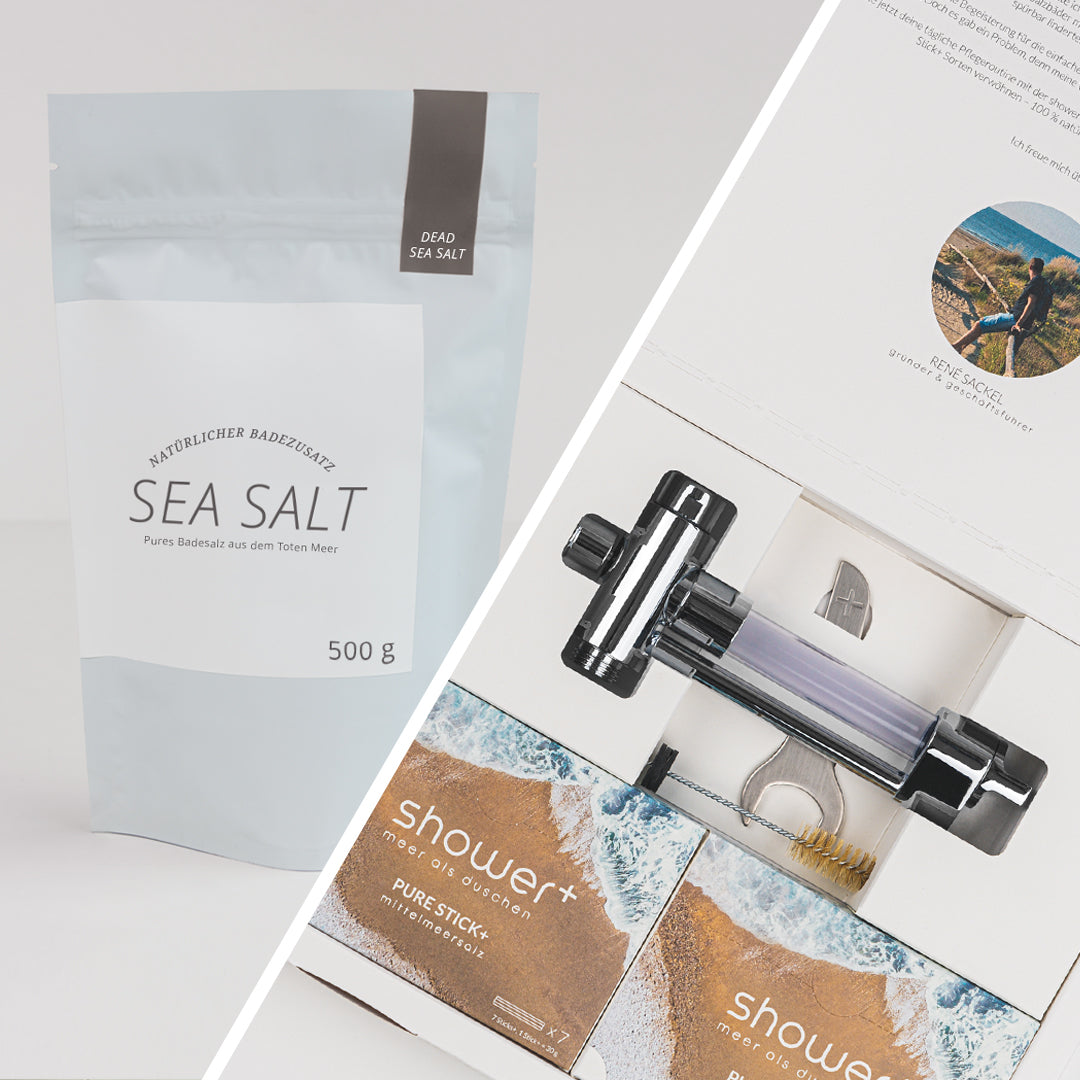
What few people know: This effect can also be used at home. With the salt shower from shower+ you can simply rinse your skin with sea salt at the end of your shower and thereby support your skin. (Important: Do not rinse off the salt water afterwards so it can remain on the skin.)
4. Moisturizing Care – If You Use One
If you use a moisturizer, it’s best to apply it directly after showering – while the skin is still slightly damp, it absorbs moisture particularly well. What you should look for: fragrance-free and without irritating preservatives.
Whether you need a cream or not is individual. Some skin does well after showering, others need the extra care. Listen to your skin here.
5. The Bucket Principle: Keep Histamine Load Low in Your Diet
The body has a certain capacity to deal with stress. When the “bucket” is full – from pollen, stress, lack of sleep – and then additional triggers are added, it overflows. This can manifest as a flare-up. One trigger that many underestimate is histamine in the diet. Histamine-rich foods such as red wine, mature cheese, sausage, and fermented products can fill the bucket faster. Anyone who consciously reduces these foods during pollen season can help the body keep the overall burden lower.
6. Ventilate Correctly
Fresh air is important, but timing makes the difference. Pollen concentrations are highest in the morning in rural areas and in the evening in cities. Ventilating at these times brings more pollen into the house.
Better: Ventilate when pollen concentration is lowest or after rain, which cleans the air.
When Should You See a Doctor?
If symptoms remain severe despite everyday measures, skin areas are weeping, scratched areas become inflamed, or the itching permanently robs you of sleep, a visit to a dermatologist is important. Even if you feel you cannot properly identify your triggers, medical or allergological advice can be very helpful.
Conclusion: Small Routines, Big Impact
Managing neurodermatitis and pollen allergy together can sound overwhelming. However, many of the measures that can support your body are not major lifestyle changes, but small everyday adjustments that can gradually become completely automatic parts of your routine.
Here’s an overview of the most important tips:
- Introduce a “lock” system for your clothing
- Shower in the evening
- Keep the water not too hot
- Moisturize your skin well
- Pay attention to your “histamine bucket”
- Ventilate at the right times
- And: Try the salt shower as a daily ritual
This way, your body — and especially your skin — can get through pollen season a little more comfortably, with the right routine by your side!

THE STARTER SET – EVERYTHING YOU NEED FOR YOUR SALT SHOWER
The daily skincare routine with 100% natural pressed sea salt in just 3 minutes, specially for acute skin problems. A gentle alternative to a salt bath for people with skin conditions such as neurodermatitis, psoriasis, acne, and sensitive skin.
The Starter Set includes one Base+, 14 Sticks+, sealing rings, a cleaning brush & the installation tool.
Bring the sea into your shower!

FREQUENTLY ASKED QUESTIONS
How long can I shower with one Stick+?
With the dosed single use, you shower for approximately three minutes at a recommended water temperature of 37 °C. Each individual Stick+ is designed for one shower. The duration may vary depending on water pressure, shower head, and temperature.
Can I install the shower attachment on any shower?
The Base+ was deliberately designed to work with almost all standard shower setups. Only flush-mounted fittings that do not have a G ½“ outlet at the tile level are not compatible with shower+ products. If you still encounter any installation issues, please feel free to contact our customer service: kundenservice@showerplus.de
Does my shower still work without inserting a "Stick+"?
Yes, you can shower as usual without a Stick+. Your normal shower routine is important to us! One of the priorities during the development of the Base+ was to ensure that the familiar function of your shower remains unchanged.
Can I install the Base+ myself or do I need help from a plumber?
The Base+ is very easy to install. Use the installation tool and follow the instructions step by step. You will also find installation tips on the packaging. If you still have any questions, feel free to contact us at kundenservice@showerplus.de. We’re happy to help!


Leave a comment
This site is protected by hCaptcha and the hCaptcha Privacy Policy and Terms of Service apply.